The Bob Brown Foundation has collaborated with the Invasive Species Council to produce a report on the growing threat of feral deer to Tasmania’s natural landscape.
The strategy document aims to provide a number of options Tasmania can take to tackle the huge impact feral deer have now and to limit that impact into the future.
Read the full strategy here.
Executive Summary
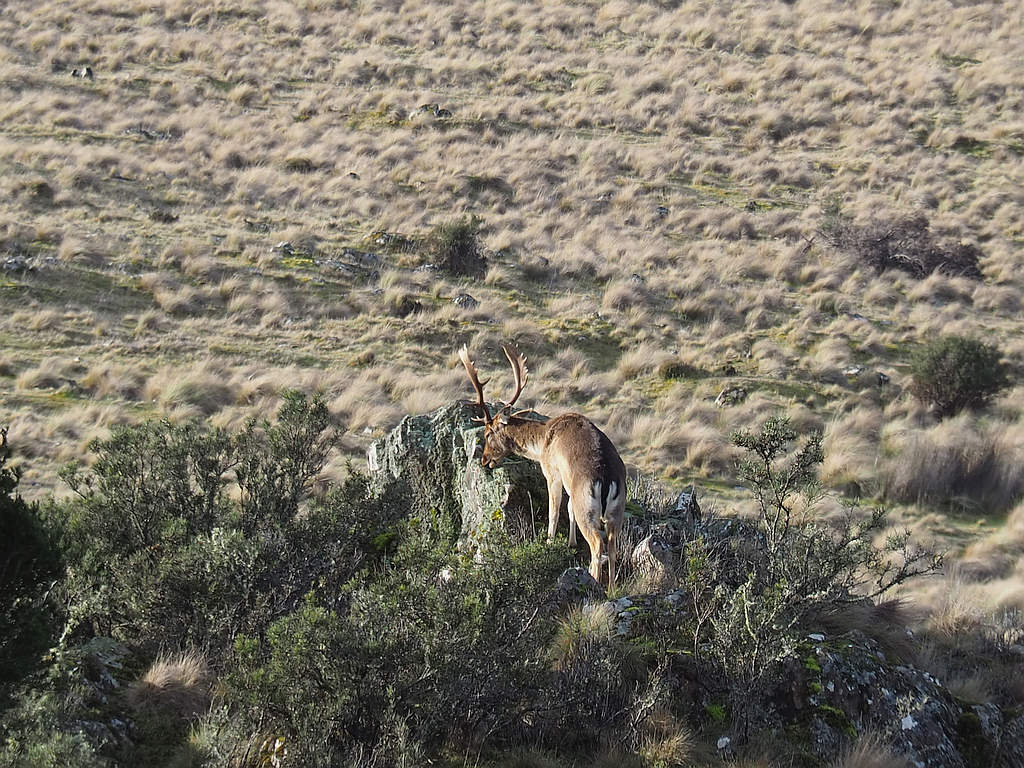
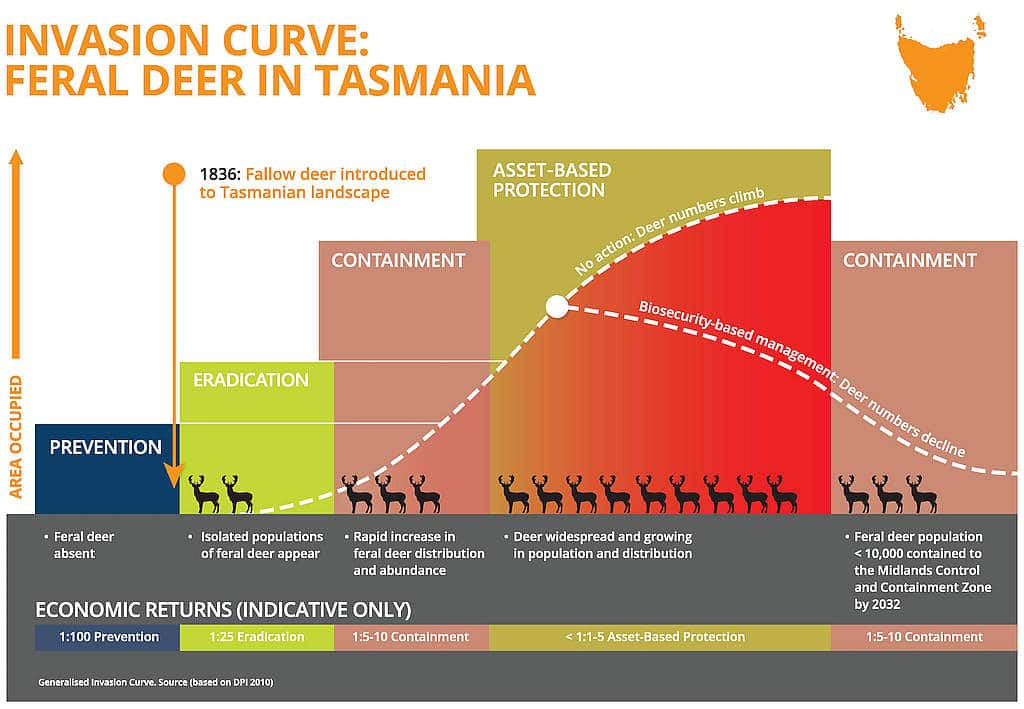
Tasmania is a remarkable landscape of unique and outstanding natural and cultural values along with highly valued agriculture. Fallow deer were introduced to this landscape in 1836 to provide a hunting resource. By the 1970s the population had grown to between 7000 and 8000. In 2019, a survey of only part of the area occupied by feral deer identified around 54,000 feral deer. This was despite the reported removal of 30,000 feral deer that same year. While the exact numbers are uncertain, it is clear that, based on the reported 11.5% annual growth rate and despite take from hunting and crop protection, Tasmania’s feral deer population now numbers well above 2019 estimates, occupying more than 2 million hectares or 27% of the state.
Feral deer impact on a wide range of environmental, economic and community values. They have invaded areas of outstanding natural values, including the Tasmanian Wilderness World Heritage Area, national parks and other conservation reserves, where they cause significant damage to native vegetation and ecologically fragile areas and as such are an assault on the living Aboriginal cultural landscape of Tasmania. Feral deer are having a significant economic and psychological impact on farmers as many are fighting a losing battle against feral deer. They are having a major impact on the viability of tree planting for ecological restoration, forest plantations and carbon farming. Feral deer also invade urban amenity areas causing considerable damage to parks and gardens and are a threat to motorists.
Climate and habitat suitability modelling predicts that 56% of Tasmania could be inhabited by fallow deer and, based on a conservative annual growth rate of 10%, the population will be more than 1 million by 2050. If nothing is done, this situation presents a grave outlook.
The management of feral deer in Tasmania is conflicted. Fallow deer are recognised as a game resource and as such listed as ‘partly protected wildlife’ in Schedule 4 of Tasmania’s Wildlife (General) Regulations 2010. The Tasmanian Government’s Quality Deer Management policy is in essence about maintaining a quality herd of feral deer for hunting and trophies. This is a hangover from outdated eras that considered deer ‘wildlife’ to be protected as game animals. This policy has hindered effective control of feral deer in Tasmania as the population has grown and spread. Feral deer have evolved from being a resource for the enjoyment of hunters to now being a serious pest.
It is clear current policies and approaches are far from adequate in dealing with the growing feral deer problem in Tasmania. There is now an urgent need for Tasmania to take a new, biosecurity-based approach to managing feral deer. This fundamentally requires removing the legally binding, ‘partly protected’ status of deer from the Wildlife Regulations (2010), which currently hinders effective control, and instead manage feral deer as a pest under the Biosecurity Act (2019). The challenge will be to the hunting community and Game Services Tasmania who covet the hunting culture and protection of feral deer for quality game, to approach the issue from a different perspective. Recreational hunters would play a role in implementing this strategy, but their interests in quality feral deer herds and trophies will no longer dominate at the expense of nature, farming and people.
The vision of this strategy for control of feral deer in Tasmania is:
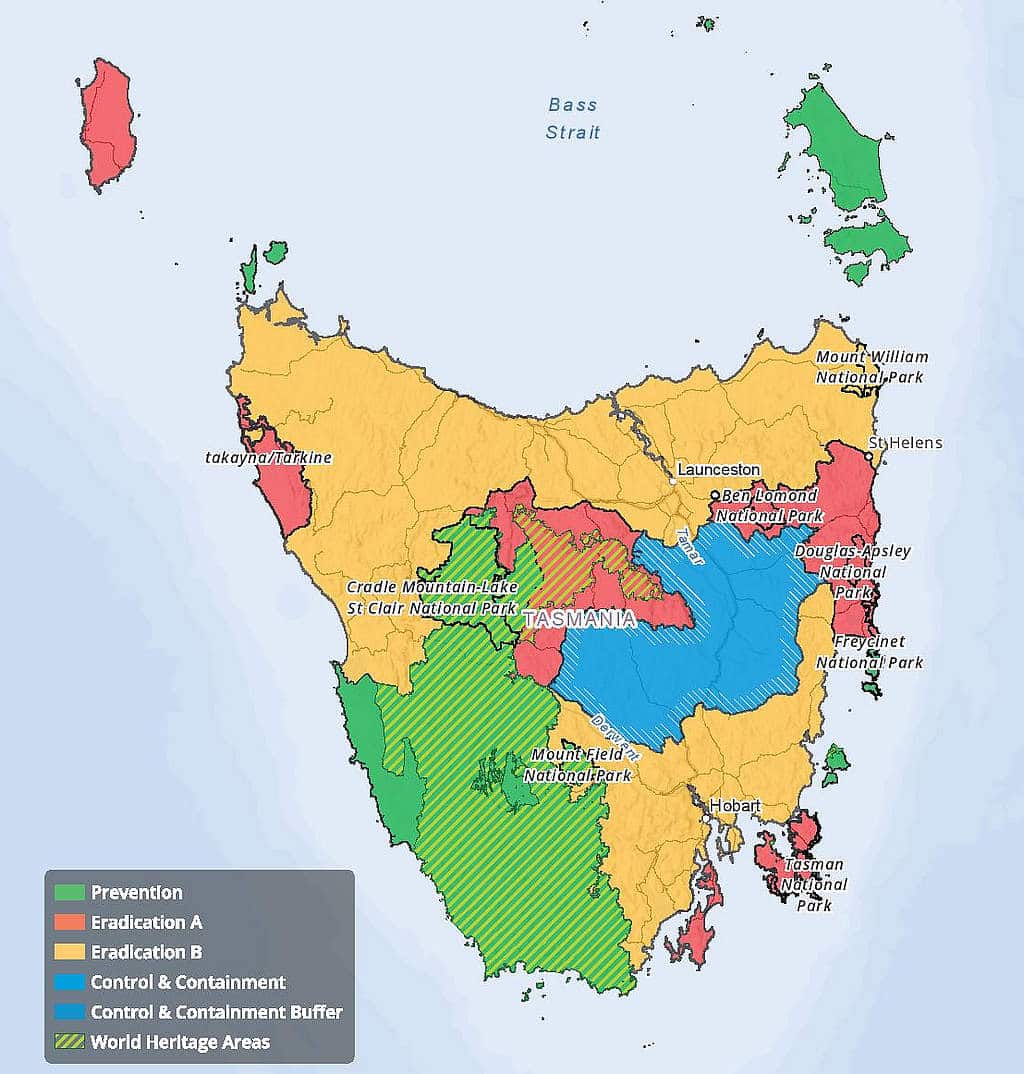
By 2032 feral deer in Tasmania are confined to a population of less than 10,000, occurring only in the Midlands Control and Containment Zone, where they are managed to fully protect high value natural, cultural, agricultural and forestry assets.
To achieve this, the strategy presents an approach that utilises biosecurity principles for managing invasive species by establishing area-based objectives. There are five feral deer biosecurity zones: Prevention, Eradication A, Eradication B, Control and Containment and Asset Protection. Each zone has a clear objective in regard to feral deer. Hindrances to land owners controlling deer will be removed and professional pest controllers using the most effective and humane methods will be utilised to control and eradicate feral deer.
This strategy presents 28 key actions to support the implementation of the plan.
The substantial shift in approach to controlling feral deer in Tasmania requires strong leadership beyond the current hunting-based paradigm. This strategy calls for a multidisciplinary Feral Deer Control Taskforce led by Biosecurity Tasmania to take leadership in planning and managing the implementation of this new biosecurity approach to controlling feral deer.
To build capacity, develop best practice and achieve change it will be vital for community groups, conservation organisations, the Tasmanian Aboriginal community, land owners, government and hunters to be working in collaboration.
It’s time to remove the conflict and act to prevent the predicted substantial escalation of feral deer across Tasmania. The $1.8 million annual cost of implementing this feral deer strategy is in the order of only 2% of the $100 million a year likely annual cost of feral deer to the community and economy. Investing now in effective control is extremely prudent – it will save millions of dollars that will be needed if feral deer numbers are allowed to continue to escalate.
Read the full strategy here.